
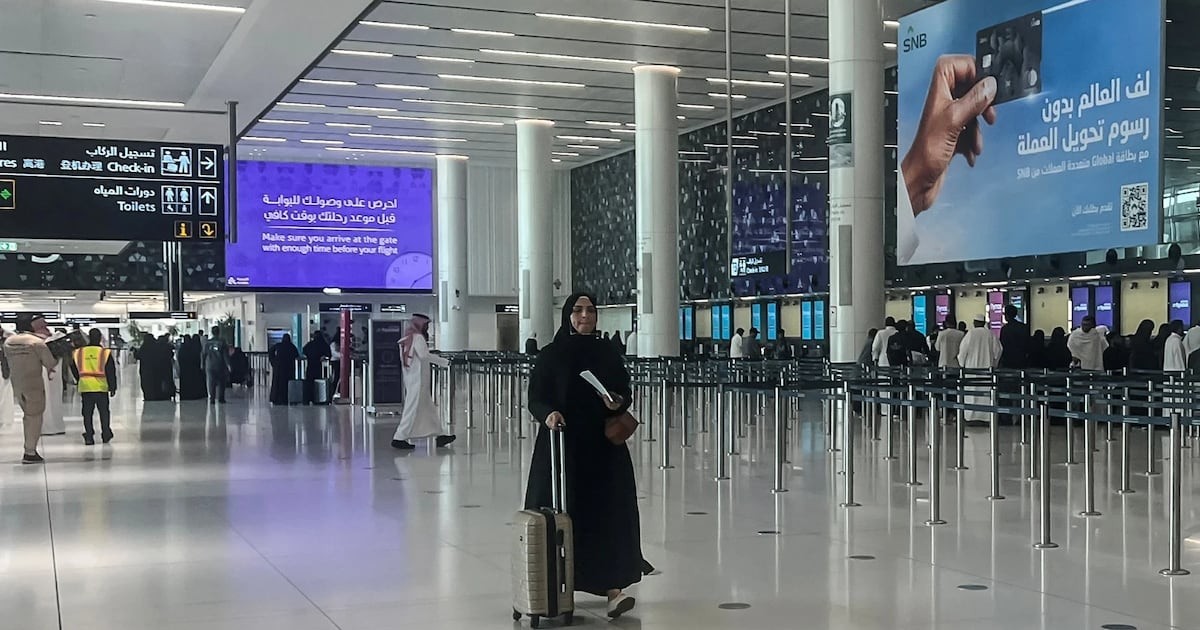
Three explosions were heard in Riyadh on Sunday morning, October 25, shortly after the reopening of King Khalid International Airport, suspended for two weeks due to strikes attributed to Yemen's Houthis.
According to
Riyadh airport partially resumes its operations
According to
Deadliest attack in a decade on Saudi soil
The airport had been targeted several times in recent weeks. On October 10, a strike on a passenger terminal killed 13 people and injured more than 300, the deadliest attack in more than a decade in the kingdom, forcing authorities to suspend operations at the site.
The Houthis' military spokesman, Yahya Saree, said Saturday that his movement had again targeted the airport, without immediate reaction from Riyadh. On Sunday, he again warned the aviation sector against the use of King Khalid airport in Riyadh, saying it is not safe and serves as a military target for his forces.
He said the Saudi regime must bear the consequences of any activity at the airport and any resulting repercussions, promising the continuation of operations against the site.
A conflict that goes beyond Yemen
The Houthis, backed by Iran, and the military coalition led by Saudi Arabia, which supports Yemeni government forces, have been exchanging strikes almost daily since the resumption of the Yemen conflict in July, after a four-year truce.
This escalation has taken on unprecedented proportions since the start of the war in 2014 between the Houthi rebels and the internationally recognized government. Sunday morning, three explosions were heard in the capital, according to an AFP journalist, shortly after residents received alert messages about an air threat.
Military response and regional implications
The military coalition announced that it intercepted a ballistic missile fired toward Riyadh. It had already indicated on Saturday that it had destroyed three ballistic missiles targeting the capital, Taif, and Yanbu, an important oil terminal on the Red Sea, as well as a drone directed toward a province in the east of the kingdom.
The Houthis claimed new strikes on Saudi territory on Saturday. Their affiliated channel, Al-Masirah, accused Saudi Arabia of carrying out several bombings in Yemen, particularly against Sanaa, the capital controlled by the movement, killing 17 people according to it. Riyadh did not comment on this toll.
What are the implications for the region?
This new phase of the conflict is part of the regional war opened at the end of February by the Israeli-American strikes against Iran. Saudi infrastructure, including airports, energy, and military sites, has become regular targets.
The gradual reopening of Riyadh's airport is both a security and political issue. For Saudi authorities, it's a matter of showing that the attacks cannot durably paralyze the capital. For the Houthis, maintaining pressure on air traffic displays their capacity to strike at the heart of the kingdom despite the coalition's military power.